The town that was founded to host guests
Most towns exist because of a port, a mine, a river crossing. Rotorua exists because people wanted to come here — and because the people of this place decided to welcome them. When you stay in a hosted B&B on a quiet Glenholme street, you are taking part in the oldest thing this town does.
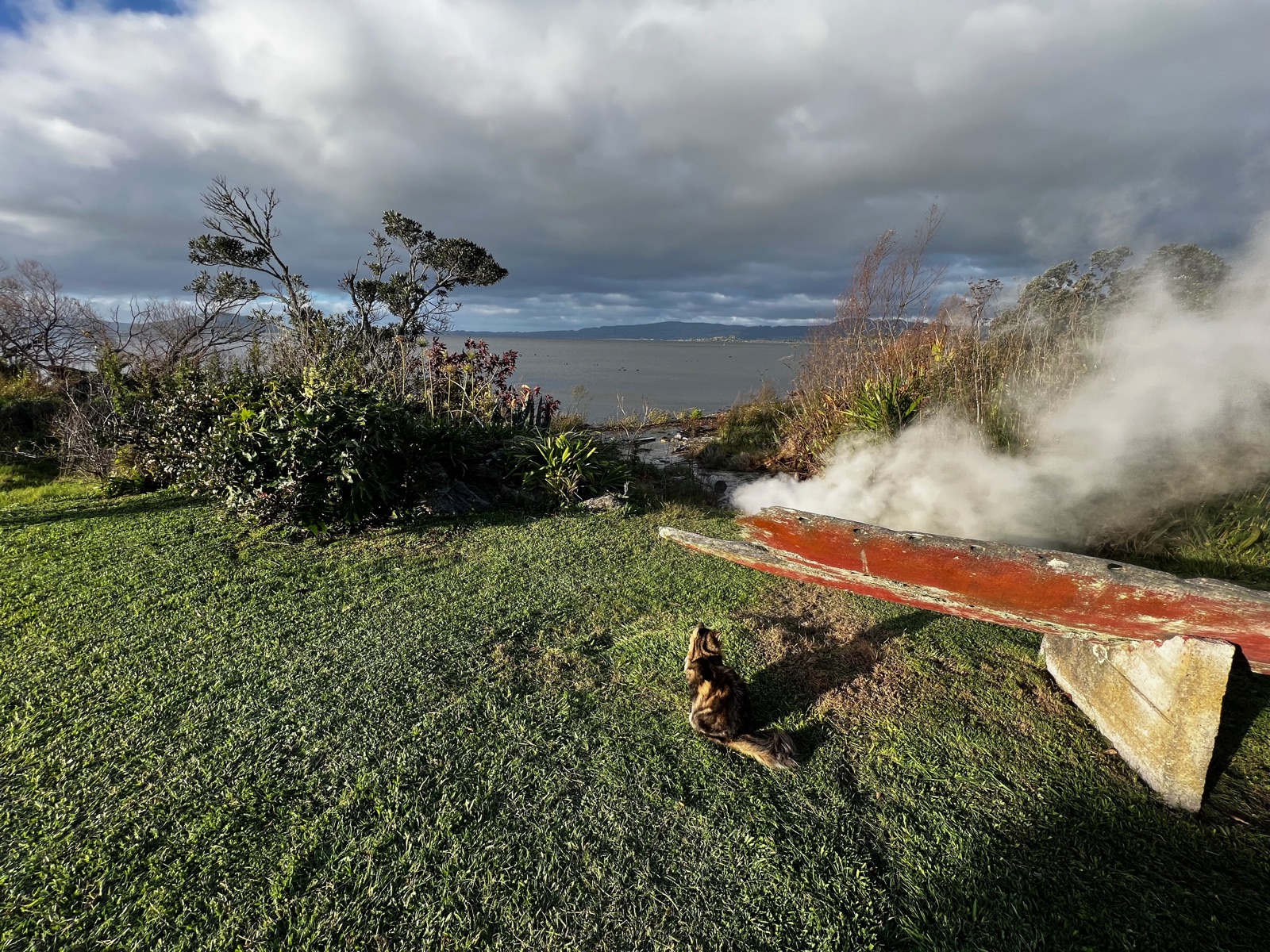
Long before there was a town, there was Ōhinemutu — the Ngāti Whakaue village on the lakeshore, where the steam rises between the houses to this day. In 1880, by agreement between Ngāti Whakaue and the Crown, a spa town was laid out on this ground for the visitors already arriving. The town's very first industry was hospitality, and it has never had another one to match it.
The eighth wonder of the world
What the visitors came for lay an hour beyond the lake: Ōtūkapuarangi and Te Tarata — the Pink and the White Terraces of Lake Rotomahana, the largest silica terraces on earth. Cascades of warm, mineral-blue basins stepped down the hillsides, and Victorian travellers crossed oceans to bathe in them.
The visit itself was a hosted experience — New Zealand's first tourism economy, Māori-owned and run. Tūhourangi controlled access, and guests were carried across the lake by canoe from the village of Te Wairoa, guided, fed and accommodated along the way.
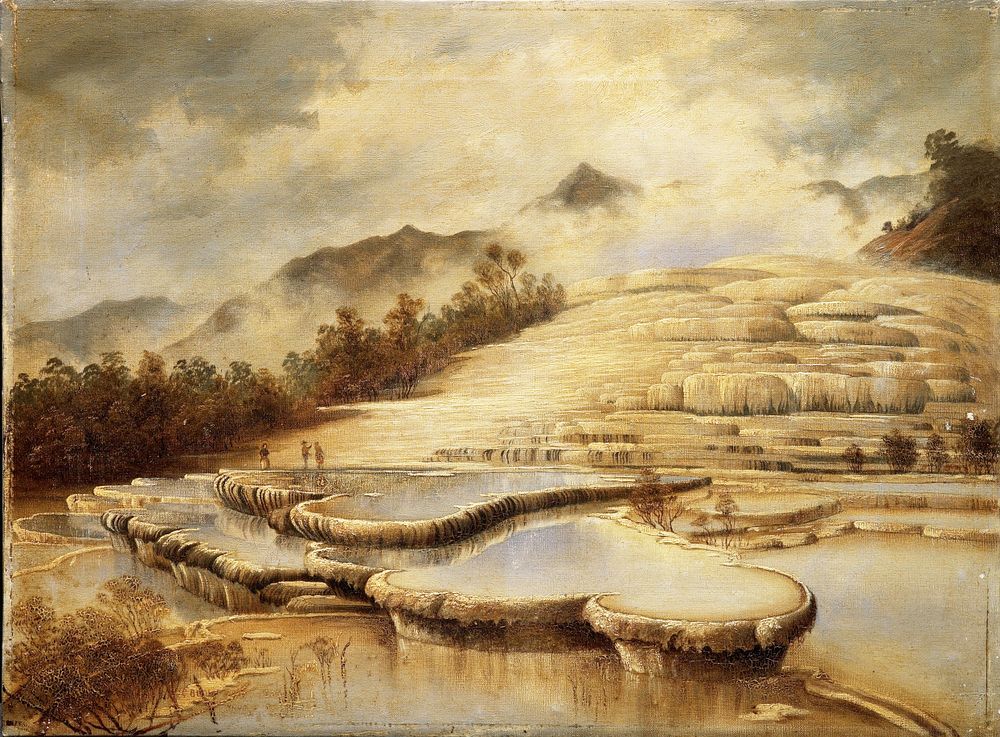
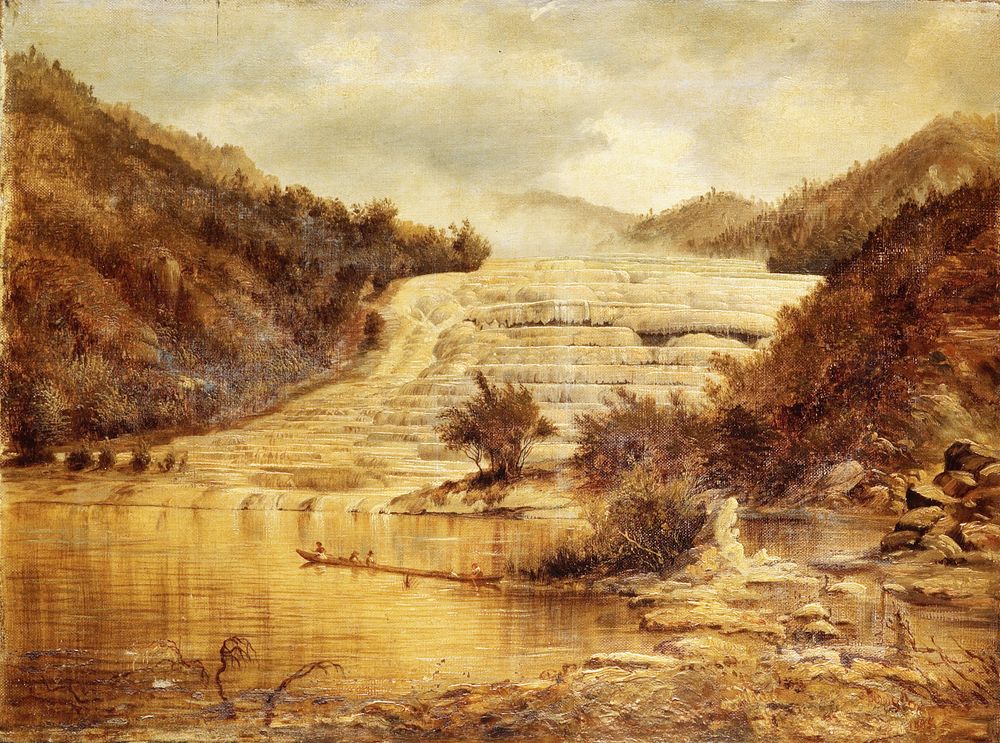
The painter Charles Blomfield camped and sketched at Rotomahana in 1876 and again in 1885. His timing gave his canvases a weight nobody could have wished for: within months, the terraces existed nowhere else.
The mountain that changed everything
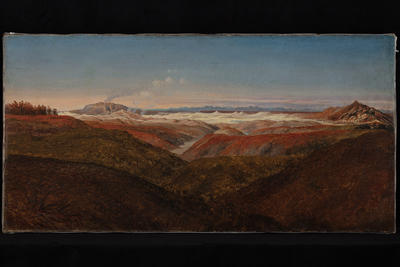
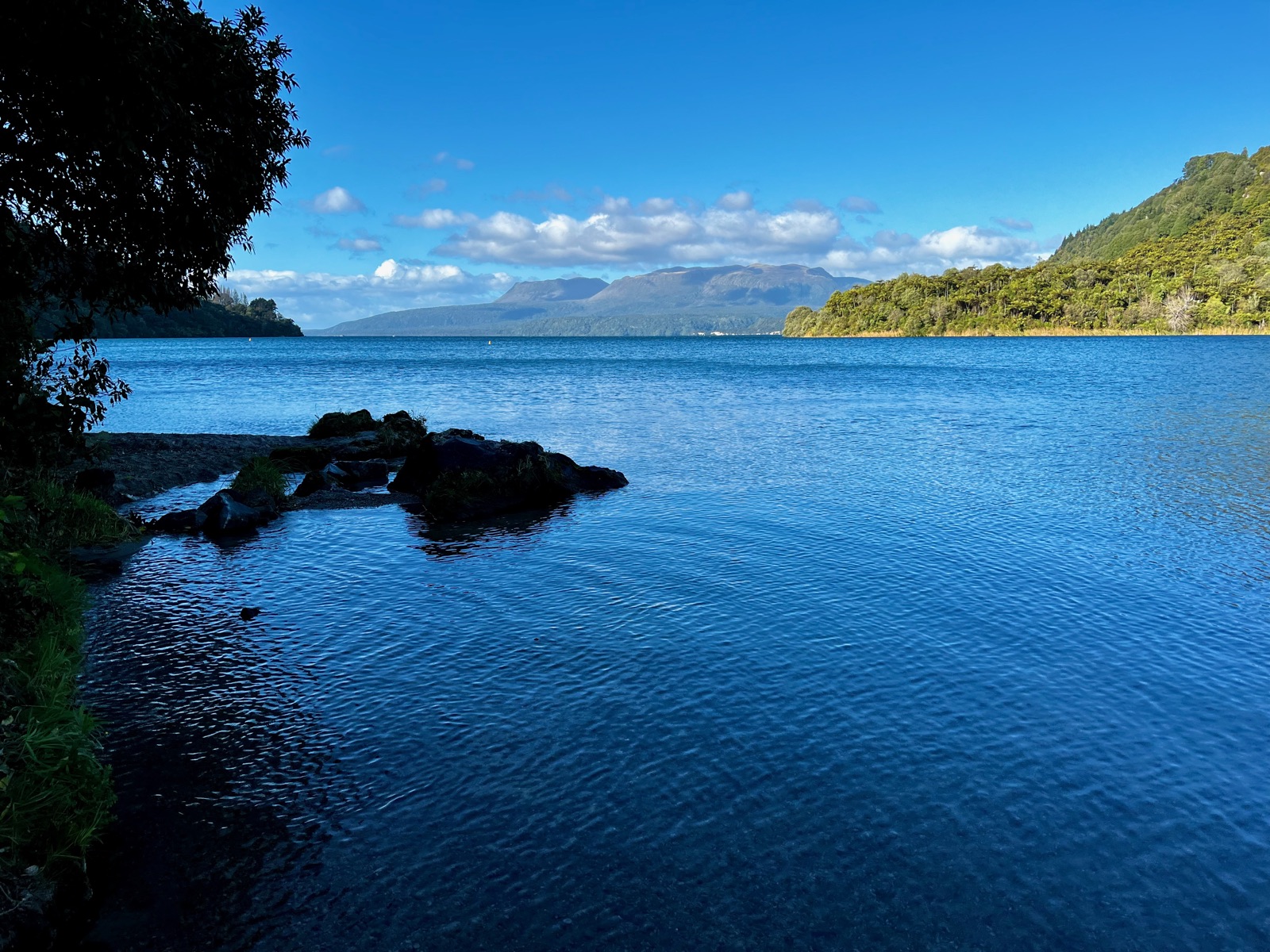
In the early hours of 10 June 1886, Tarawera erupted along its entire length. Lake Rotomahana exploded, burying the surrounding valleys in mud and ash. By morning the terraces were gone, the village of Te Wairoa lay buried, and about 120 people — most of them Tūhourangi — had lost their lives. It remains New Zealand's deadliest eruption, and the mountain still wears the great rift along its summit.
Te Wairoa — the village you can still visit
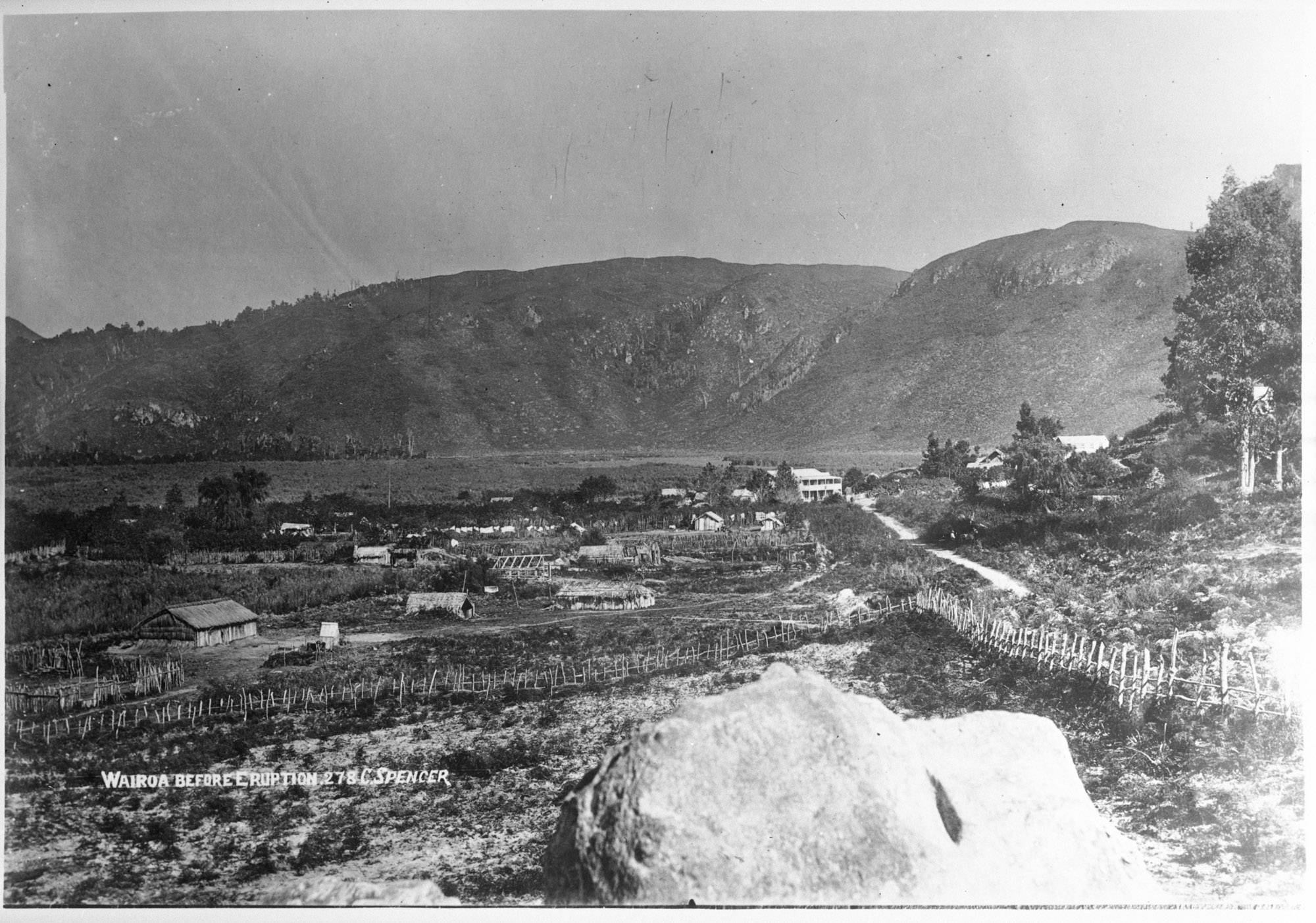
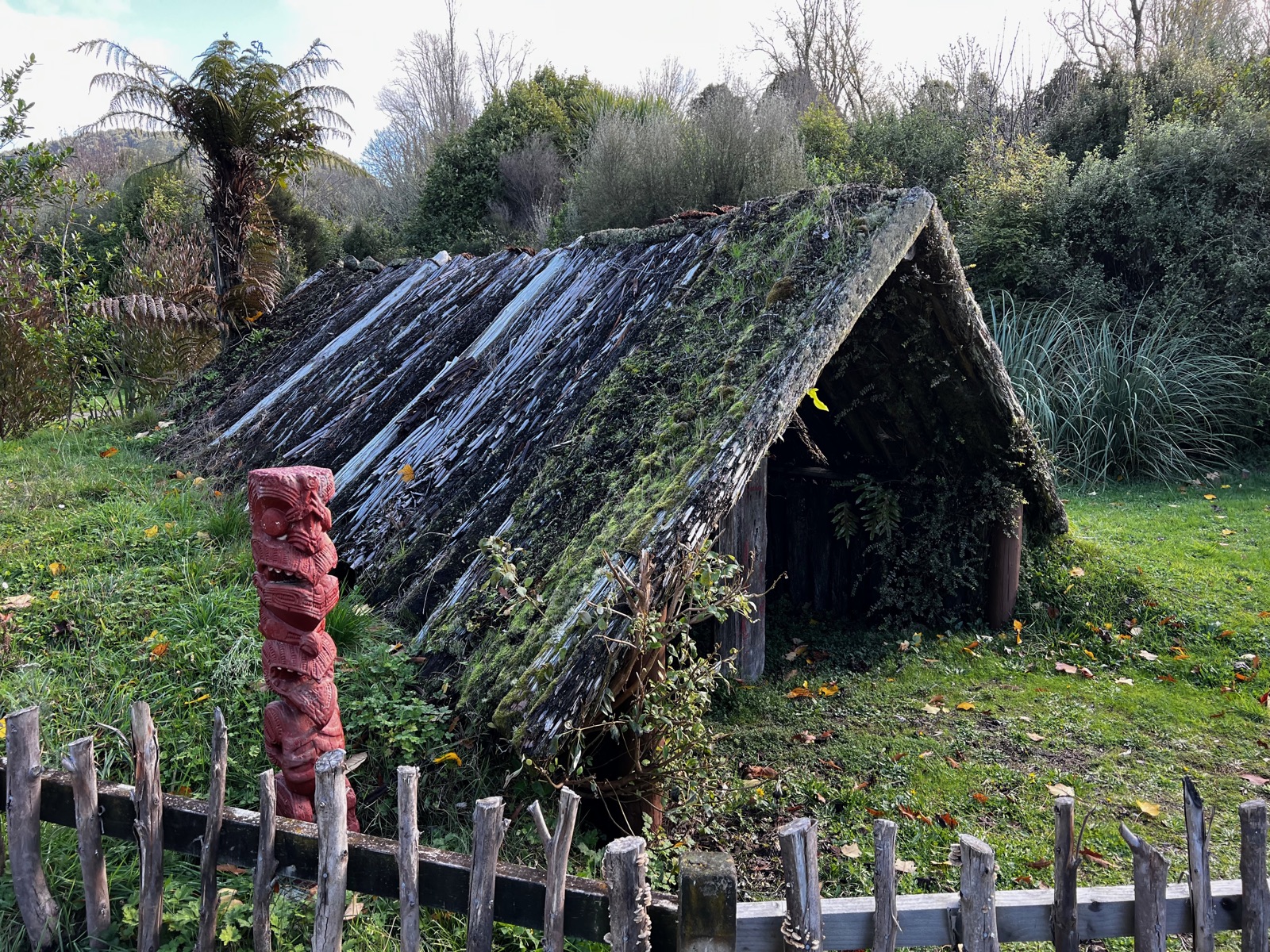
The town rebuilds its promise
Rotorua had lost its wonder four years into its life — and answered by doubling down on the one thing that remained everywhere underfoot: the heat itself. The government engineer Camille Malfroy coaxed dormant vents in the Sanatorium grounds back to life — a town literally engineering geysers for its guests. The railway arrived from Auckland in 1894, and the coaches ran daily to the geysers at Whakarewarewa.
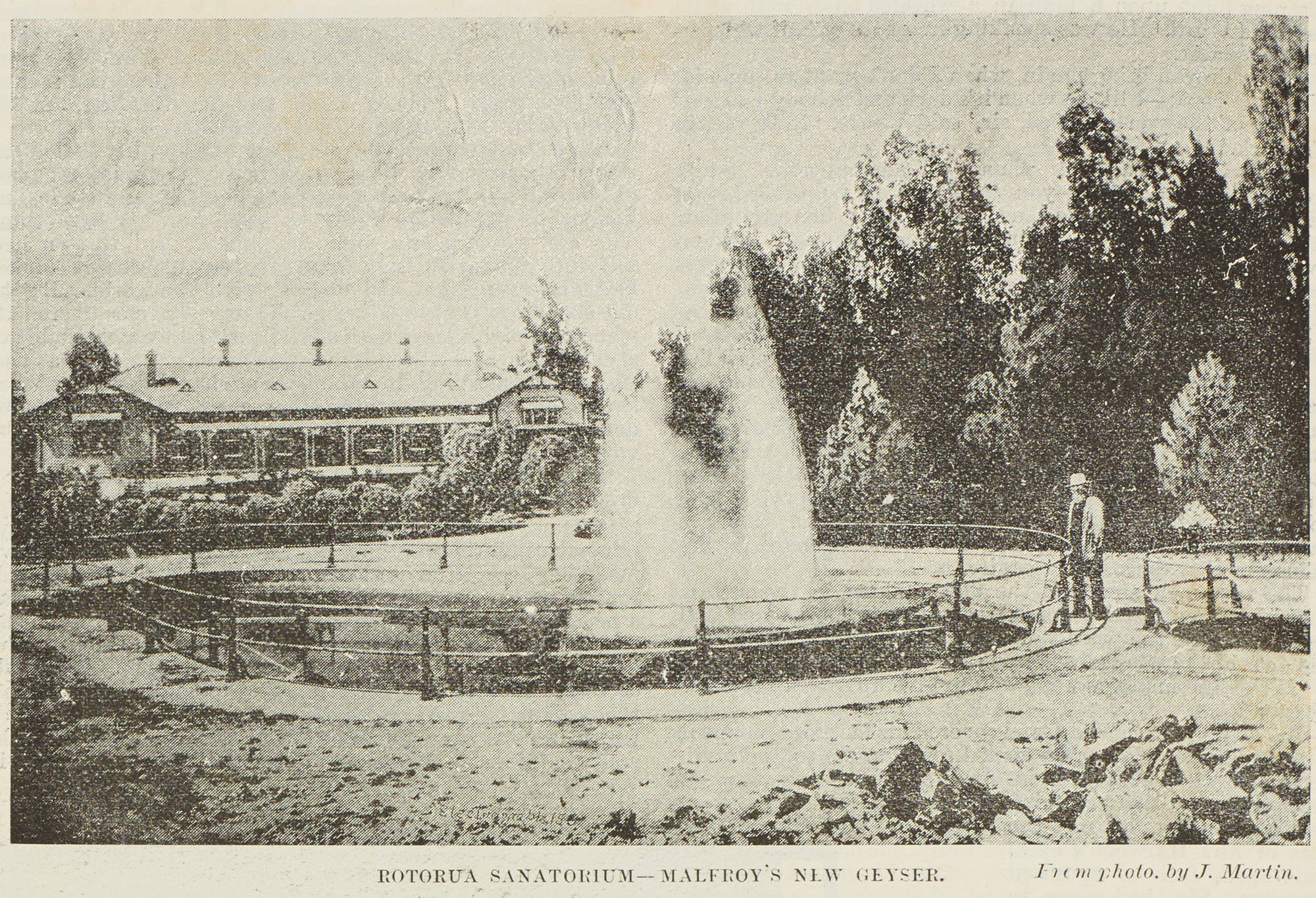
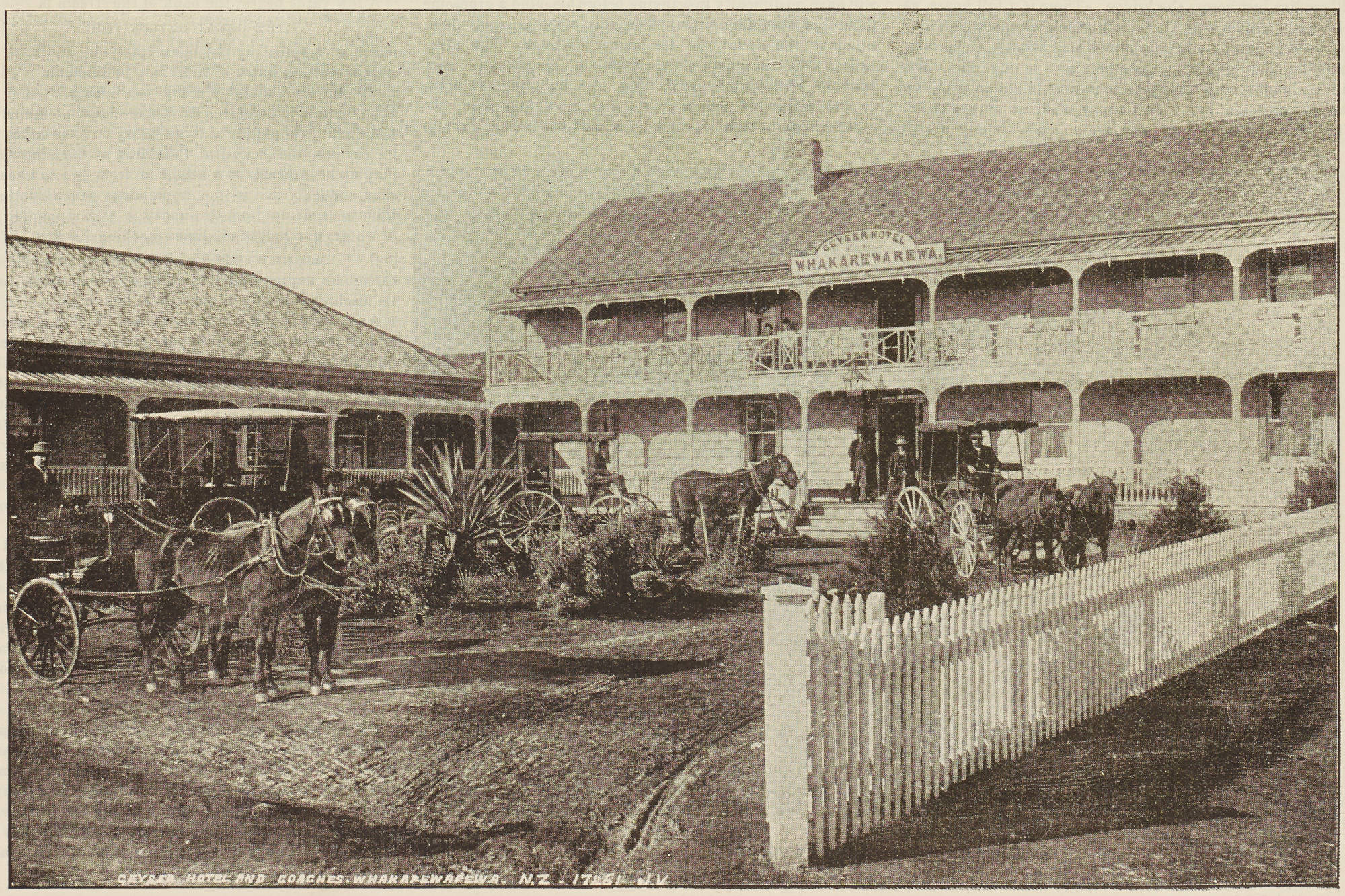
In 1901 the government founded the Department of Tourist and Health Resorts — the first national tourism department anywhere in the world — and ran Rotorua as its showcase. This town was professionally welcoming guests before the word "tourism" had settled into the language; the landmark i-SITE in the town centre is that office's direct descendant.
The Great South Seas Spa
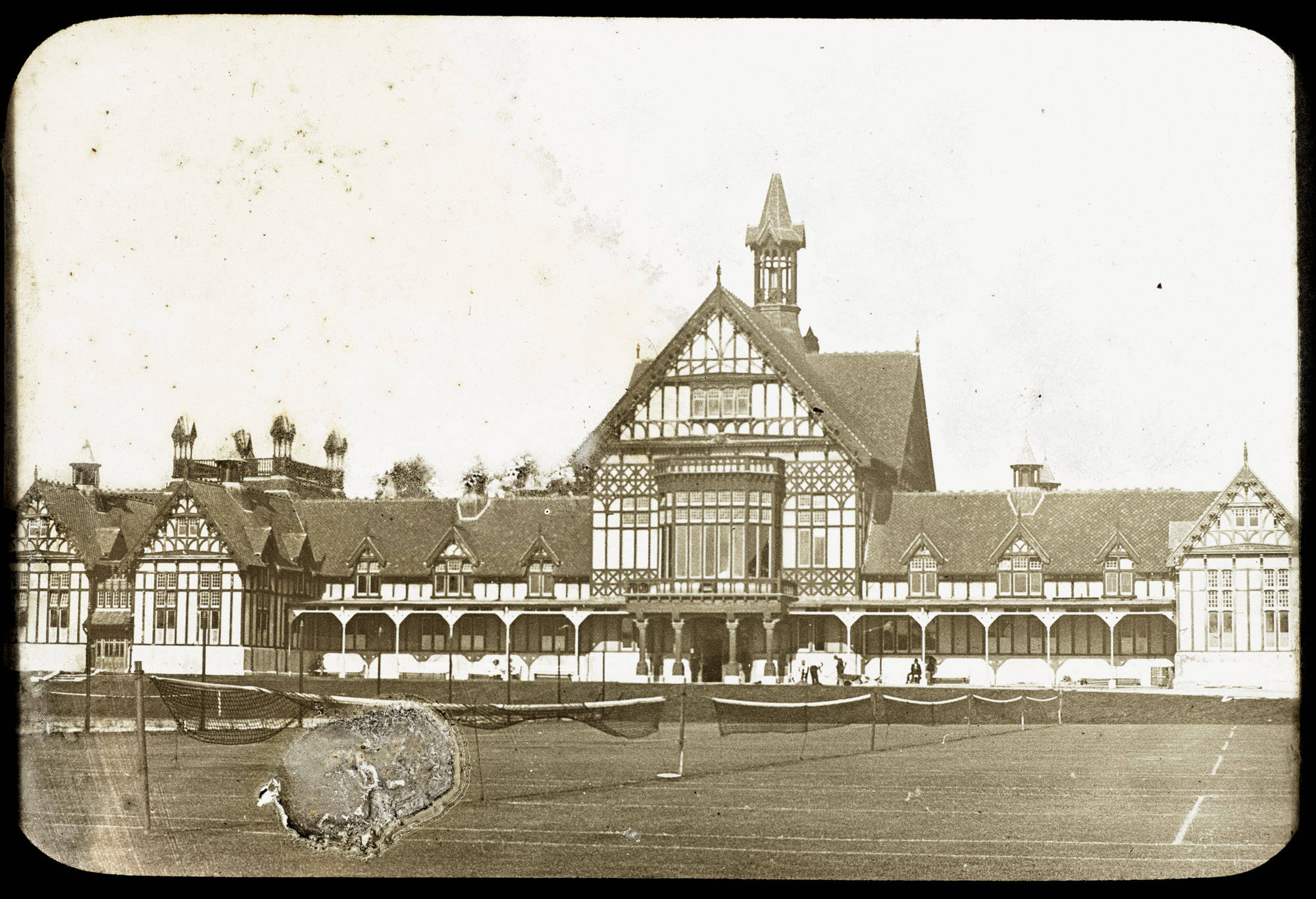
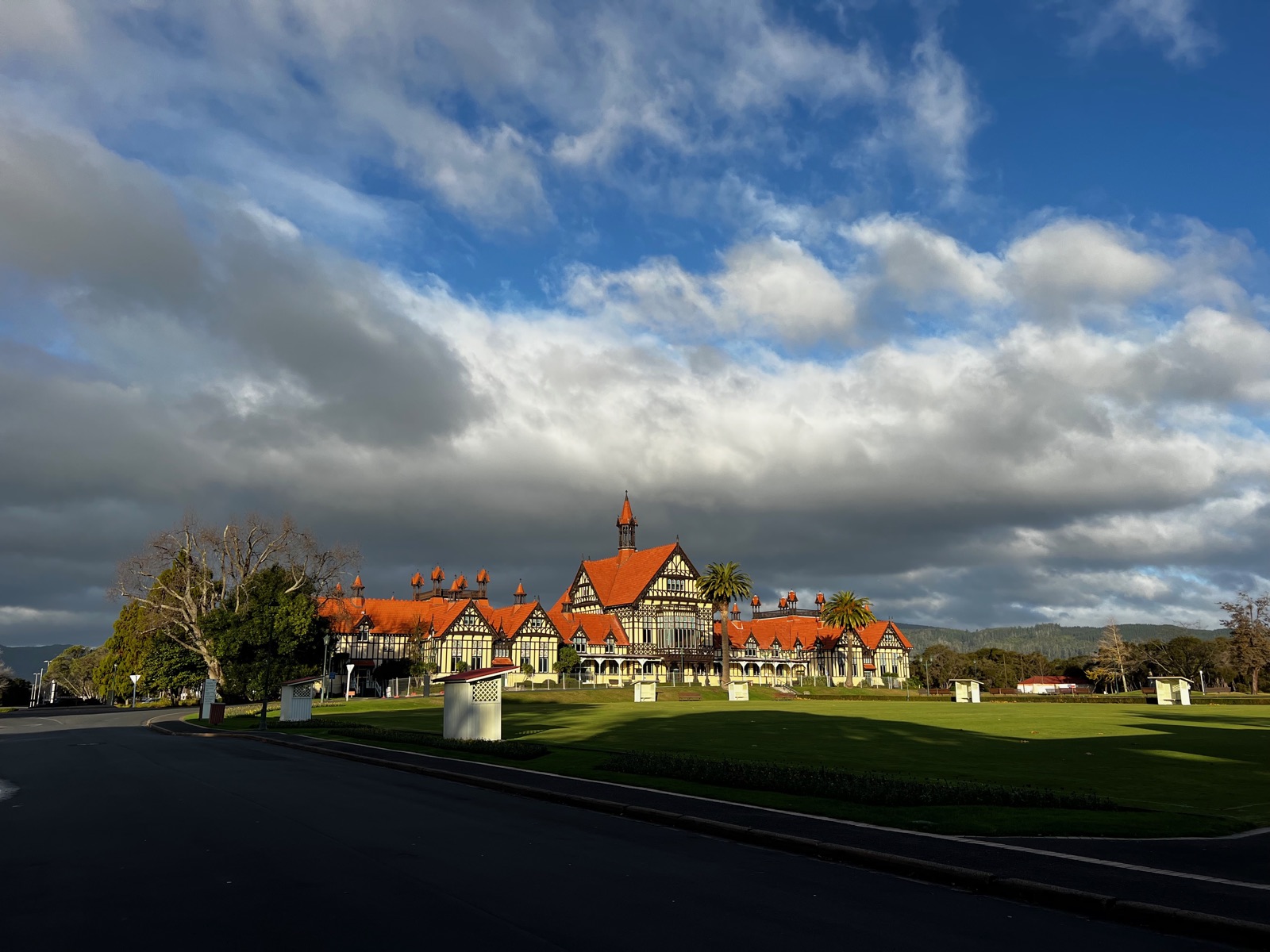
The Bath House of 1908 — "the Great South Seas Spa" — was the young department's masterpiece, and guesthouses spread down Fenton Street to meet the trains. The town has been growing around its guests ever since.
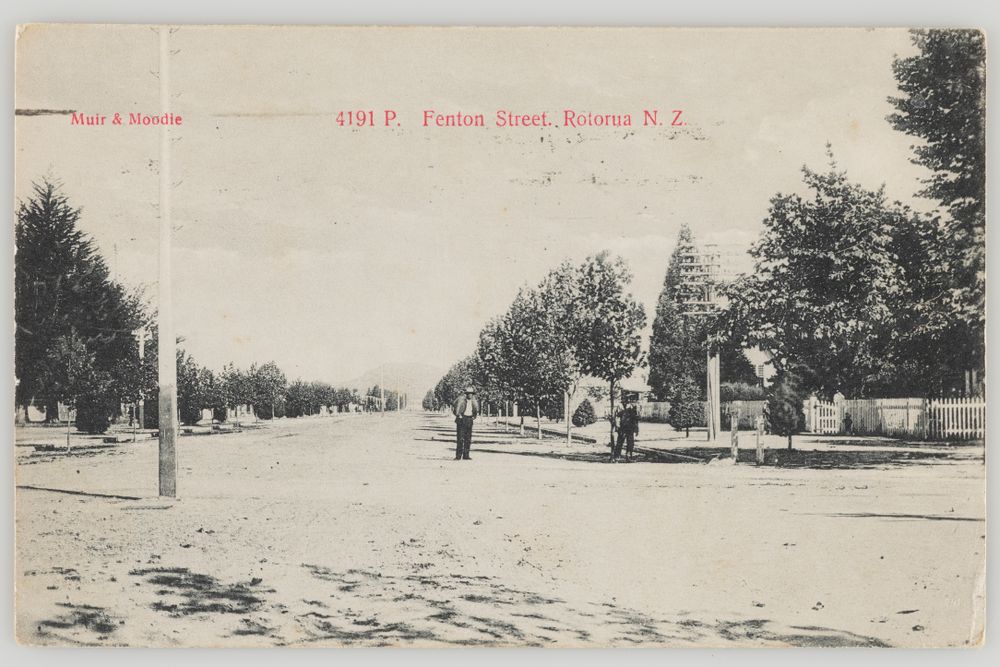
Fields into streets — the story of Glenholme
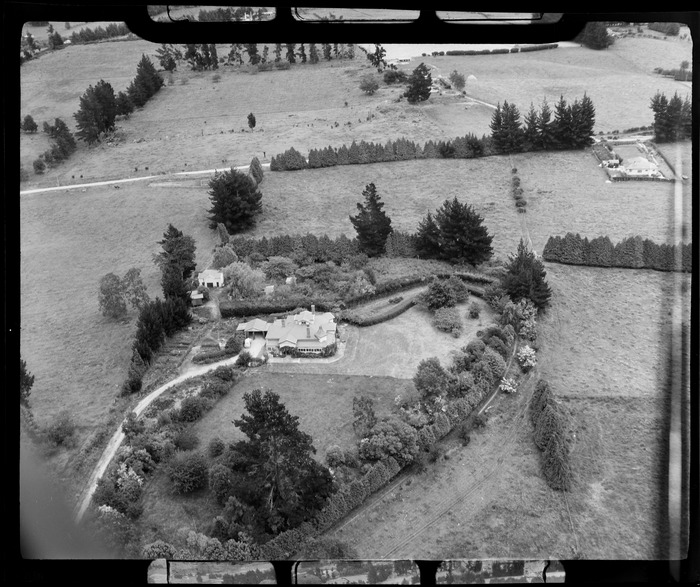
Our own corner of the story is younger than you might think. In 1947 the Glenholme homestead still stood in open fields; within a decade the quiet streets of this suburb had grown up around its gardens, and the name stayed. Sumner Street is one of them — close to everything the town built for its guests, on ground that was farmland in living memory.
Still hosting, 145 years on
In 2023 Ngāti Whakaue — whose agreement created this town — opened Wai Ariki Hot Springs & Spa on the lakefront: the people who first welcomed guests here, welcoming them still. And in Glenholme, Jan keeps the oldest promise of this town in her own way: a warm suite, a cooked breakfast, and somebody glad you came.
Stay in the story — book direct with Jan[ draft notes: all archive images carry DigitalNZ "commercial use" clearance; per our rights procedure each landing page gets a final confirmation + exact reference numbers before publishing. Jan: does this telling sit right with you? Anything here your guests ask about that we should add — or anything you'd rather we said more carefully? ]